
How to Get Rid of Bats in Your Attic in Utah
For an established attic colony, exclusion is the humane, lasting fix, and in Utah the timing is set by state rules. Here is what it involves, when timing matters, and why sealing the hole too soon backfires.
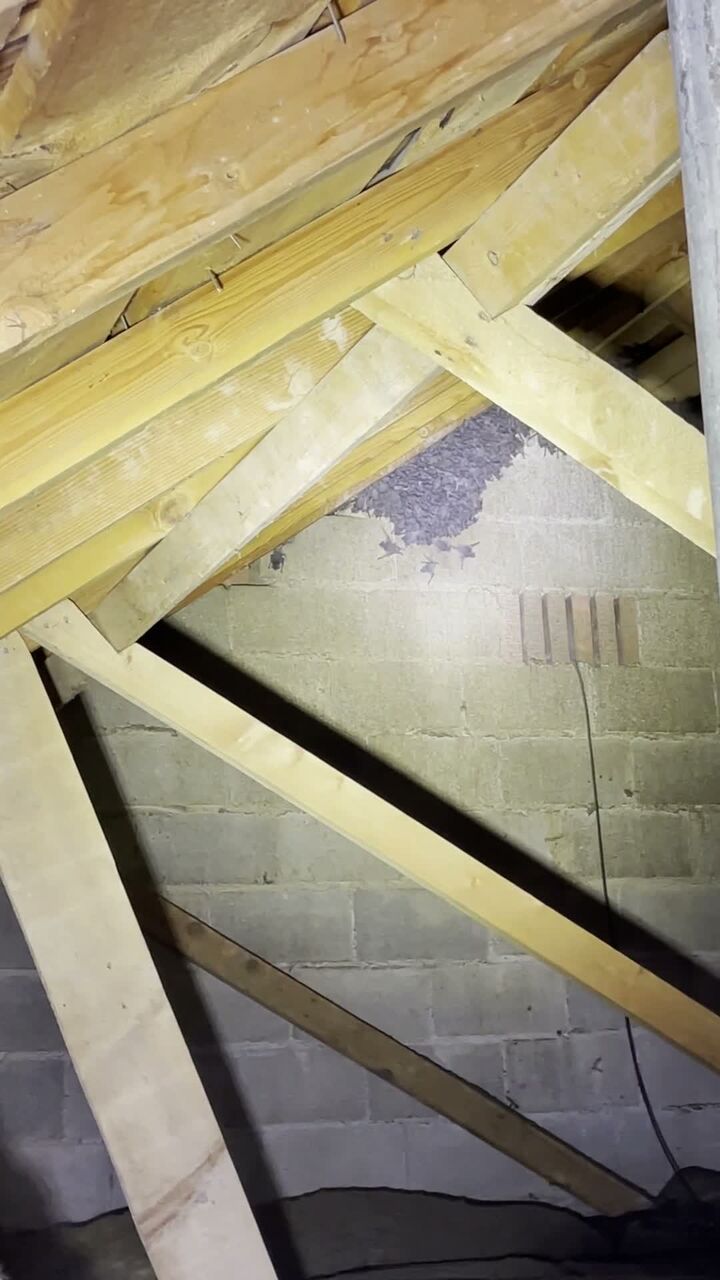
If you are hearing scratching above the ceiling in a Salt Lake City split-level, or finding dark smudges along the fascia of a home up on the Provo bench, you are most likely dealing with bats, not mice. Bats are one of the most common attic intruders we are called about along the Wasatch Front, and under Utah wildlife rules they are also the one animal you cannot simply trap and move on your own. Here is how Utah bat exclusion works, when timing matters, and what not to do when pups are in the roost.
How do you get rid of bats in your attic?
You get bats out with exclusion, not traps or sprays. A trained technician installs one-way devices over the openings the colony uses, so the bats can leave to feed at night but cannot get back in. In a normal exclusion, the colony clears in three to seven days; then every gap gets sealed and the space is cleaned. Done at the right time, it is the humane, lasting method Utah homeowners should look for.
The reason exclusion works when nothing else does is that it uses the bats' own behavior. Adult bats in an active colony typically leave at dusk to hunt insects. A one-way device, a tube or a screen cone, lets them drop out normally but blocks the return trip. Within a week the entire colony has left on its own. No trapping, no poison, no animals sealed inside the walls.
Is it legal to remove bats yourself in Utah?
Not during maternity season, and not by killing them. The Utah Division of Wildlife Resources classifies all of Utah's bats as protected wildlife, which makes it illegal to kill them, and it restricts exclusion during maternity season, roughly May through August, when flightless pups are in the roost. Sealing the entry during that window traps the young inside, which is both inhumane and against DWR rules.
That maternity window runs from roughly May into August, and the exact timing for any exclusion is set under DWR guidance. Females gather in warm attics to give birth, and the pups cannot fly for several weeks. Shut the colony out then and the mothers are locked away from their young, which die in the wall. That is why the DWR coordinates with permitted wildlife companies to schedule exclusion for the spring and fall windows when it does no harm. If you want the full picture, we cover it in our guide to the Utah bat maternity season.
Which bats end up in Utah attics?
The species we see most often in Utah attics are the big brown bat, the little brown myotis, and the Yuma myotis. All three form summer maternity colonies in warm, sheltered spaces, and all three move readily into attics, soffits, and wall voids when they find a way in.
The big brown bat is the one we see most often in buildings, and it can overwinter in a warm attic rather than leaving for a cave. Little brown and Yuma myotis colonies tend to be larger and are tied to water, so homes near rivers, ponds, and irrigation canals see more of them. Utah is home to 18 bat species, but the Utah Division of Wildlife Resources notes that most roost in natural sites like caves, cliffs, trees, and mines rather than homes. You can see the full list on our Utah bat species page.
What are the signs you have bats and not another animal?
The clearest sign is guano. Bat droppings pile up directly below an entry point and crumble to a fine, glittery dust, unlike the solid pellets a mouse or rat leaves. Look also for dark, greasy staining around a gap in the roofline, a faint chittering sound near dusk, and the sharp ammonia smell of urine soaking into insulation.
Many homeowners first realize they have a colony when a single bat turns up in a bedroom or hallway. One bat indoors can mean more are roosting nearby, especially if you also see staining, guano, or repeat activity at dusk. They follow the same paths they use to reach an established roost. We break the warning signs down further on our signs of bats in the attic page.
Why can't I just use a repellent or seal the hole?
Because neither works, and one of them can be deadly. Ultrasonic repellers, mothballs, and peppermint sprays do not clear an established colony, which simply ignores them. Sealing the entry while bats are inside is worse: it traps the colony, and during maternity season it kills the flightless pups, leaving you with a far bigger odor and health problem than you started with.
The only product that reliably moves bats is a one-way exclusion device installed by someone who knows how bats enter and exit. We explain why the store-bought options fail in our guide to bat exclusion versus repellents.
What does the bat removal process look like?
It runs in four stages. First, an inspection: we walk the roofline at the openings bats favor, the gable vents, ridge cap, fascia gaps, and chimney flashing, then check the attic to gauge colony size and contamination. Bats can squeeze through a gap smaller than a finger's width, so this step matters.
Second, we install one-way devices over the active entries and screen off the secondary gaps. Third comes a monitoring period of three to seven days while the colony clears itself out every night. Fourth, we return to remove the devices, seal every opening permanently, and confirm the home is empty. If years of guano have built up, cleanup is scheduled separately. The full walkthrough is on our bat removal process page.
Are bats in the attic dangerous?
They can be, in two ways. The first is the guano itself. As droppings dry, they can carry the spores of Histoplasma, the fungus behind histoplasmosis, a respiratory illness. The CDC warns that exposure can happen around accumulated bat or bird droppings. In Utah's dry climate guano desiccates quickly and can crumble into airborne dust when disturbed, so never sweep or vacuum a dry deposit without proper respiratory protection.
The second risk is rabies. It is rare, but bats are a serious rabies concern, and a bite can be too small to feel, especially during sleep. If anyone may have had direct contact with a bat, contact your county health department before releasing it, so they can advise you about rabies testing. Add the steady damage of urine soaking into insulation and framing, and a long-running colony becomes an expensive problem. Our guano cleanup guide covers the health side in detail.
When should you call, and what is the best time of year?
Call as soon as you suspect a colony, because a colony does not stay small. Left alone, it grows season over season, and so do the guano, the odor, and the eventual repair bill. The best windows for full exclusion are early spring before the pups arrive and late summer into fall once they can fly.
If you are seeing bats now, the smartest first step is an inspection so you know the colony size and your options. Cost depends on the number of entry points and whether cleanup is needed, and we put it all in writing up front. You can review the numbers on our Utah bat removal cost guide, then call when you are ready to schedule an inspection.
Frequently asked questions
How long does bat removal take in Utah?
Most jobs take about one to two weeks from start to finish. Once one-way exclusion devices are installed, the colony clears in three to seven days because every bat exits nightly to feed. We then return to seal every entry point permanently and, if needed, schedule guano cleanup.
Can I have bats removed in the summer?
Usually not with full exclusion. Under Utah Division of Wildlife Resources rules, exclusion is restricted during bat maternity season, roughly May through August, because sealing the entry would trap and kill the flightless pups in the roost. A bat inside your living space can still be handled as an emergency.
How much does bat removal cost in Utah?
Cost depends on colony size, the number of entry points, and whether guano cleanup is needed. After an inspection we give a written estimate up front, with no surprises.
Will the bats come back after exclusion?
They should not, as long as the colony has fully exited and every gap is sealed with the correct materials. Those entry points are then closed for good, and our exclusion work is backed by a written warranty, so if a bat re-enters through an area we sealed, we come back.
Related reading
Wildlife in your home? Contact us today.
Call to schedule an inspection.