
Pigeons Under Solar Panels: What Utah Homeowners Should Do First
If pigeons keep slipping under your rooftop solar array, they are probably nesting there. Confirm it from the yard first, then get the nest out before any guard goes on.
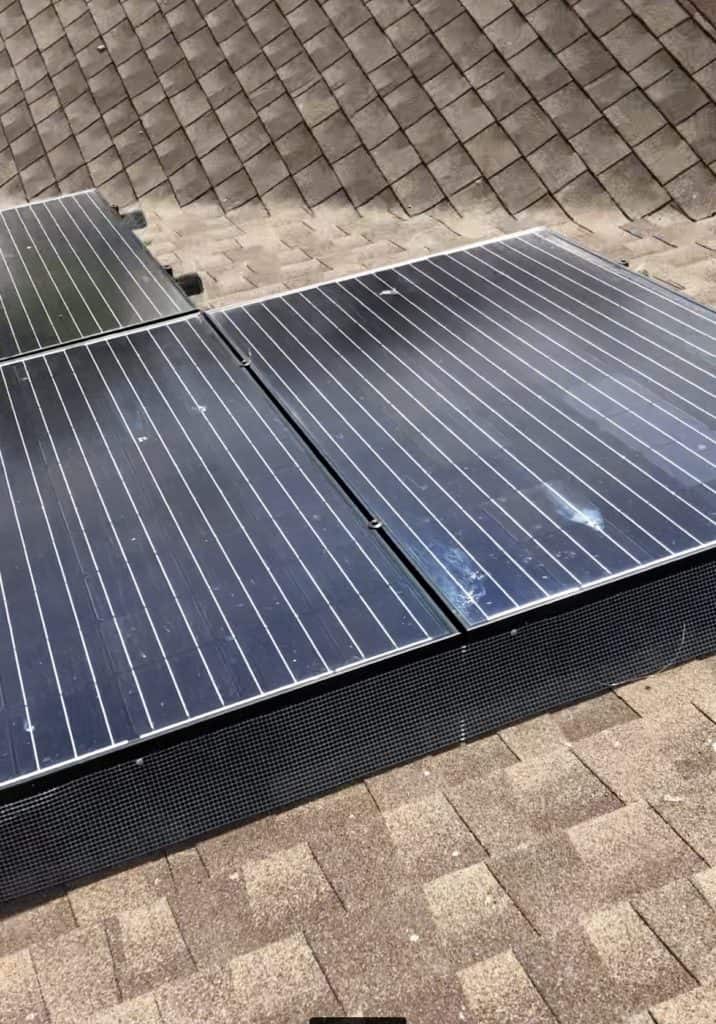
Pigeons that keep ducking under a row of solar panels are usually not just passing through. The space between a panel and the roof is shaded and out of the wind. For a bird that likes to nest on flat, covered surfaces, it is close to perfect. And because nobody can see under there from the yard, the nest, the droppings, and the feathers pile up quietly.
Why pigeons pick the space under your panels
Utah State University Extension describes rock pigeons nesting on flat, covered surfaces such as sheltered ledges, bridges, and parts of buildings. Their nests are rough platforms of twigs, grass, and sticks. A rooftop array comes close, with a solid cover a few inches above the roof deck and open sides. (USU Extension: Rock Pigeon)
Food keeps them around. The same USU fact sheet says pigeons eat mostly grain and seed, along with garbage and food that people leave out, on purpose or by accident. A spilled bird feeder two houses down or pet food left on a patio can be enough to keep a pair nesting on your roof.
What to look for from the ground
You can usually confirm the problem without a ladder. Watch the roof for a few minutes and look for these signs.
- Birds landing at the edge of the array and walking under a panel instead of flying off.
- Twigs, dry grass, or feathers poking out from under the lower edge of the panels.
- White streaks of droppings on the shingles below the array or collecting in the gutter.
- Cooing or scratching overhead.
Take pictures from the yard or the driveway with your phone zoomed in. One wide shot of the whole roof section tells us more than a close-up of a single bird, because it shows which edges are open. Stay off the roof. Panels, conduit, and droppings make a pitched surface slippery.
Why the nest is worth dealing with
USU notes that pigeon droppings can become a health hazard when they are allowed to build up, and the CDC recommends leaving large amounts of bird droppings to professional hazardous-waste companies. (CDC: Reducing Risk for Histoplasmosis) Our guide to pigeons and doves on Utah roofs covers the histoplasmosis risk in more detail.
There is also the equipment. The U.S. Department of Energy's guidance on maintaining photovoltaic systems says to remove animal nests and debris from electrical equipment and to keep wiring properly managed. A nest built under the array falls under that advice. (U.S. Department of Energy: Operate and Maintain an Existing PV System)
Timing matters too. Once snow and ice settle on a Utah roof, working around an array gets slower and riskier. Fall, while the roof is dry, is a practical time to get it done.
Make sure it is actually a pigeon
The species decides what can legally happen to a nest. Rock pigeons are on the U.S. Fish and Wildlife Service list of non-native birds that the Migratory Bird Treaty Act does not cover. (Federal Register: Bird Species to Which the MBTA Does Not Apply) Many native birds are covered, and destroying their active nests without a permit is prohibited. (U.S. Fish and Wildlife Service: Bird Nests)
So a mourning dove tucked under a panel is a different situation from a pigeon. Our guide to telling pigeons and doves apart covers the quick field marks.
How we clear and guard an array
Order matters here, because a guard installed over an active nest traps the birds underneath.
- First, we identify what is nesting under the array. Pigeons and other nuisance animals are removed before a guard goes anywhere near the edge.
- Nests, droppings, and feathers come out, and the area under the panels is decontaminated with HEPA-filtered equipment.
- A black stainless steel mesh is clipped to the panel frame around the edge of the array. Nothing is drilled into the roof or the panels.
You can read more about the process on our solar panel critter guard page.
Keep your solar installer in the loop
Birds and electrical problems are separate questions. If your system's production has dropped or the inverter keeps tripping, call your solar provider. DOE's guidance calls for an electrical inspection after nuisance tripping and says maintenance should be handled by trained staff or qualified professionals. Only your installer can tell you whether the system itself has been affected.
If you have questions about how a guard interacts with your system or its warranty, confirm with your installer before the work is scheduled.
After the guard is on
Let roofers and solar technicians know the guard is there before they start work, and make putting it back part of their job if they need to open a section. Every so often, look at the array from the ground. A loose corner, a new gap, or birds going back under the same edge all mean the guard needs attention.
Pigeons roosting on a ledge, a chimney, or a sign are a different job from pigeons nesting under solar panels. If birds are causing trouble elsewhere on the property, our pigeon removal service and our write-up on bird problems on commercial buildings cover those situations.
Frequently asked questions
Will a solar panel guard stop pigeons from landing on top of the panels?
No. A perimeter guard closes the gap underneath the array so birds cannot nest there. Pigeons can still land on the panel surface or the ridge. If birds are roosting somewhere else on the roof, that is a separate problem with its own fix.
Does the guard require drilling into my roof?
No. Our solar panel guard is a black stainless steel mesh that clips onto the panel frame, so there are no screws or holes in your roof or panels.
Can I clean out the nest and droppings myself?
We do not recommend it. Reaching under panels on a pitched roof is a fall risk, and scraping out a nest stirs up the droppings, which the CDC advises avoiding.
What if pigeons get back under the panels after the guard is on?
Look for a loose corner or a section that was opened during roof or solar service and not put back. Take a photo from the ground and call us so the guard can be checked and closed again.
Related reading
Pigeons under your solar panels? Contact us today.
Call to schedule an inspection of your array.