
How to Keep Bats Out of Your House in Utah
Utah bat colonies move in quietly and return to the same roof year after year. Getting them out legally and for good comes down to state timing rules and one correct method.
Utah Homes Give Bats Three Things They Cannot Find Anywhere Else
Warmth, darkness, and a gap just wide enough. The little brown bat, the species most commonly found roosting in residential structures across the Wasatch Front and Utah Valley, can squeeze through an opening smaller than a finger's width. Your roofline probably has several right now. By the time most Salt Lake City or Provo homeowners notice the chittering at dusk or the ammonia smell in the attic, the colony has usually been there for a full season, sometimes longer.
Bats are not a pest problem in the traditional sense. They are a timing and access problem. Get the timing wrong and the law prevents you from acting. Get the access wrong and you trap animals inside and trade one problem for a much worse one. This post covers how bat exclusion actually works in Utah, what the Utah Division of Wildlife Resources (DWR) requires before anyone lays a hand on a roost, and the practical steps that keep bats out permanently.
Why Bats Pick Utah Homes Year After Year
Bats in Utah follow a predictable seasonal pattern that matches almost perfectly with the warming cycle along the Wasatch Front. Female little brown bats form maternity colonies in late April and May, give birth to a single pup in June, and nurse through July and into August. They need a structure that holds heat, stays dry, and has multiple small openings for coming and going. The older wood-framed homes in neighborhoods like South Salt Lake, west Ogden, and older Provo subdivisions fit that description well.
What surprises most homeowners is how loyal bats are to a successful roost. A colony that used your attic last summer will navigate back to the same gaps this spring, often within days of the same calendar date. This is not coincidence. Bats have strong site fidelity and pass roost knowledge within the colony. A single season of successful roosting in your home can mean years of annual returns if the entry points stay open.
Warmer microclimates in areas like St. George and the broader Washington County basin can see bats active for a longer season than homes in the higher elevations around Ogden or Lehi. That matters for exclusion timing, and a licensed technician familiar with Utah's regional variation can advise you on the local window for your address.
Exclusion: How Legal Bat Removal Actually Works
Exclusion means sealing the entry points so bats cannot re-enter after they leave to forage. It does not mean trapping, poisoning, or any method that harms the animals. Those approaches are both illegal and ineffective. A single colony of little brown bats can consume 1,000 or more mosquitoes and flying insects per hour, which makes them genuinely useful around Utah's irrigation canals and summer lawns. The goal is to redirect them out of your structure, not eliminate them.
A proper exclusion runs in three stages. First, a technician does a full exterior inspection to find every active entry point and every secondary gap that could be used after the primary ones are sealed. Second, one-way exclusion devices, small tubes or net assemblies that allow bats to exit at night but block re-entry, are installed at the active locations. Third, after the colony has fully vacated, typically within a week to two weeks depending on colony size and weather, the devices come out and all openings are sealed permanently with materials rated to hold up in Utah's freeze-thaw cycles: hardware cloth, metal flashing, exterior-grade caulk, and foam backer rod.
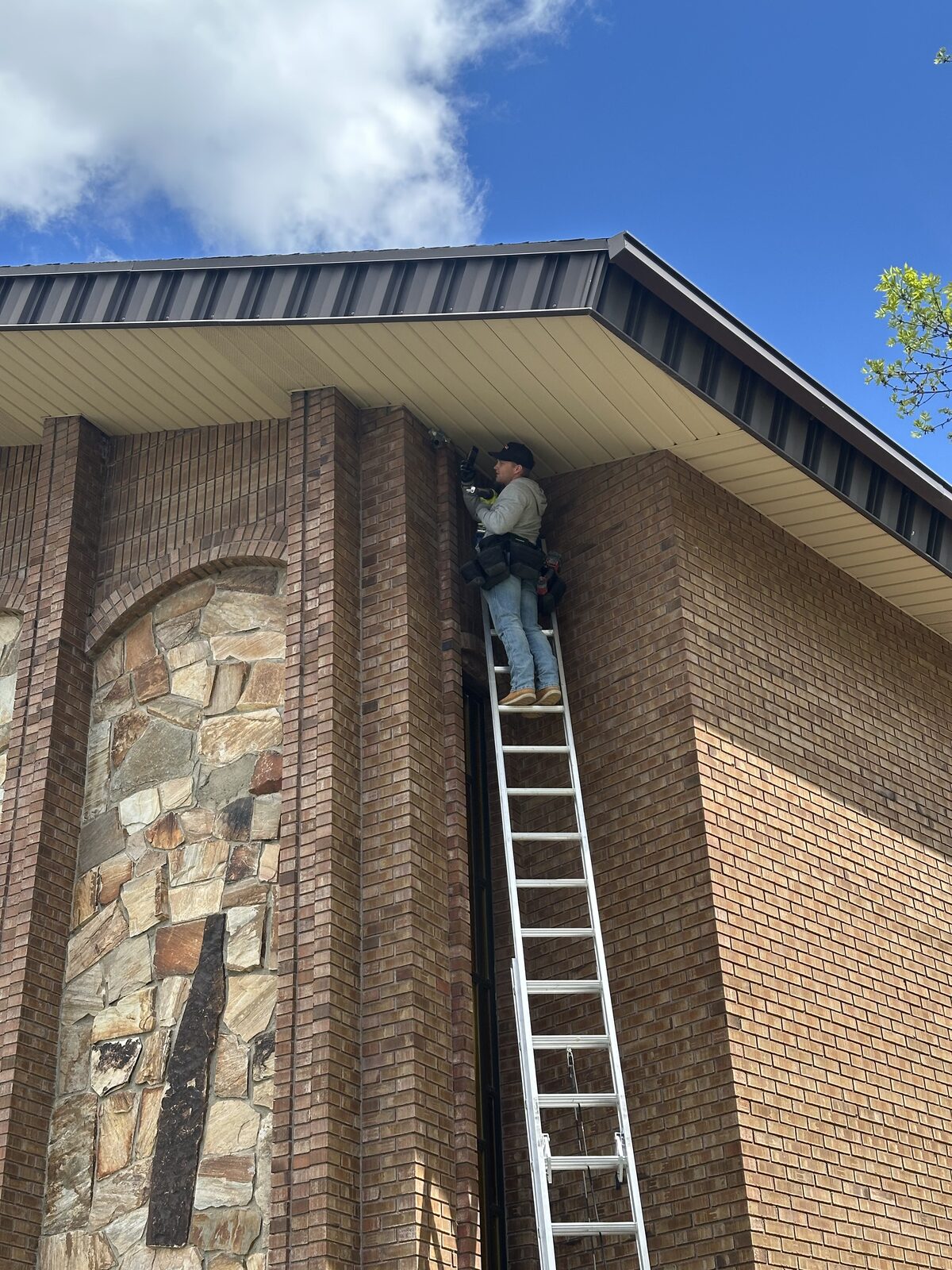
One point that cannot be overstated: partial sealing without exclusion devices traps animals inside. Bats caught inside a wall in summer will find their way into the living space. The problem doubles in scope and cost. Exclusion done correctly is permanent. Done halfway, it creates a crisis.
What Does Utah Law Actually Say About Bat Removal?
This is the question that matters most, and the answer is specific. According to the Utah Division of Wildlife Resources (DWR), all bat species in Utah are protected under state wildlife law. It is illegal to kill, trap, or harm them except under specific permitted conditions. Legal removal means exclusion only. There is no legal path to exterminating a bat colony in Utah.
The DWR also restricts the timing of exclusion work. According to the Utah Division of Wildlife Resources, the maternity season in Utah runs roughly May through August, and you should not seal or exclude bats during that window. During those weeks, pups are either not yet born or not yet capable of flight. Sealing entry points while pups are inside leaves them to die in the attic or wall, which creates a secondary odor and contamination problem that is far more expensive to address than the original exclusion would have been. Decomposing animals in a wall cavity or attic insulation can make a home unlivable for weeks.
Outside the maternity window, two legal exclusion periods exist. Early fall, roughly September through October, is the most active window. The pups are flying, the whole colony is using the roost nightly, and exclusion devices work efficiently. Early spring, from late February through late April, is the second window, after bats return from hibernation or winter migration but before females are pregnant. Either window works. The choice often comes down to when a homeowner discovers the problem and how quickly they want to act.
If a company quotes you bat removal without discussing the maternity season or the DWR's seasonal restrictions, that is a meaningful red flag about their licensing and their methods.
How Do You Know Bats Are in Your House?
The four most common ways Utah homeowners find out: they watch bats stream out from the same roofline gap at dusk, they find guano accumulating in the attic or along an exterior wall, they smell a sharp ammonia odor from a large established colony, or they discover a single bat inside the living space that squeezed through an interior gap.
Bat guano resembles mouse droppings in size and color but crumbles to a fine dark powder when dry and contains visible insect fragments. It piles up directly below the roost. Heavy accumulation near a specific soffit, gable vent, or chimney chase is a reliable indicator of where the colony is entering. A large, long-established colony in an attic can leave several inches of guano across a significant area, and that material carries a genuine health risk. Histoplasmosis, a respiratory illness caused by a fungus that can grow in bat droppings, is an established concern in enclosed attic spaces. Cleanup is not a DIY project once accumulation is significant.
Finding a single bat inside your home is a different situation that requires immediate attention. Do not release it outdoors if there is any chance it came into contact with someone sleeping or a child, since bat bites can be very small and go unnoticed. According to the U.S. Fish and Wildlife Service, exposure to a bat in those circumstances warrants consultation with your local health department. The bat should be captured without direct skin contact and held for testing if exposure is possible.
Gaps That Let Utah Bats In: A Practical Checklist
Prevention is almost always less expensive than exclusion after a colony establishes. Homes that have never had bats can be proofed against them with a focused inspection and targeted sealing. The most common entry points in Utah homes follow a predictable pattern.
- Fascia and soffit joints. Where the fascia board meets the soffit is the single most common entry location in Utah homes. Wood shrinks and separates over Utah's dry summers, and gaps that were tight five years ago may now be wide enough for an entire colony. Even a quarter-inch separation is usable.
- Ridge vents and gable vents. Both are required for attic ventilation and both need screening. Hardware cloth with a mesh no larger than one-quarter inch is the correct material. Standard window screen is too thin and tears. Gable vents on older homes in Sandy, Layton, and Orem are among the most frequently cited entry locations we find on inspections.
- Chimney gaps and flashing. The space between a chimney and its surrounding chase often opens as caulk shrinks and cracks through Utah freeze-thaw cycles. This is one of the most overlooked entry points and one of the most direct paths to attic access.
- Pipe and conduit penetrations. Any location where plumbing, electrical conduit, or HVAC lines enter through an exterior wall is a potential gap. These should be sealed with exterior-rated caulk or foam rated for the temperature swings Utah sees from January to July.
- Roof-to-wall transitions and dormers. Homes with complex rooflines, common in older Ogden and Salt Lake City neighborhoods, develop small openings at the intersections between roof planes and walls as the structure settles over decades.
A single thorough inspection covering all these locations, before any colony arrives, is the most cost-effective bat work you can do on a Utah home. Most homeowners are surprised by how many gaps their home has that they never noticed from ground level.
What to Expect From a Legitimate Wildlife Inspection in Utah
A qualified Utah wildlife company starts with an on-site inspection. The technician walks the full exterior, identifies active entry points and secondary vulnerabilities, estimates whether a colony is present and how large, and maps out the exclusion timeline based on the current date and DWR seasonal restrictions. Expect the inspection to take 30 to 60 minutes on a typical single-family home.
The scope of work should be explained clearly before any contract is signed. That includes which openings get exclusion devices, how long the wait period runs before final sealing, whether a return visit is included in the quoted price, and whether guano cleanup or attic restoration is part of the scope or a separate estimate. Ask whether the company holds a Utah wildlife control operator license and whether they work within the DWR maternity season window.
Pricing on residential bat work in Utah ranges from a few hundred dollars for a small structure with one or two entry points and a modest colony, to several thousand dollars for a home with extensive entry points, multi-year guano accumulation, and compromised attic insulation. No honest technician can give you a firm number over the phone. The inspection is what makes an accurate estimate possible.
Frequently asked questions
Can I seal bat entry points myself right now?
It depends on the time of year. According to the Utah Division of Wildlife Resources, exclusion is restricted during the maternity season, roughly May through August, because pups cannot yet fly and will die if sealed inside. Outside that window, a licensed technician can install one-way exclusion devices, allow the colony to leave on its own, and then permanently seal all openings.
How do I know if I have a colony or just one stray bat?
A single bat that flew in through an open door is very different from a maternity colony living in your attic or wall voids. Colony signs include dark oily staining around entry gaps, a strong ammonia smell from accumulated guano, and soft scratching or chittering sounds near the roofline at dusk. Watching your roofline from outside at sunset is the most reliable way to confirm activity. A professional inspection gives you colony size and exact entry locations.
Are bats in Utah protected by law?
Yes. All bat species in Utah are protected under state wildlife law, and several also carry federal protections. According to the Utah Division of Wildlife Resources (wildlife.utah.gov), it is illegal to kill, trap, or harm bats except under specific permitted conditions. Legal removal means exclusion only, not extermination, and only outside the restricted maternity season. The northern long-eared bat is additionally listed as endangered under the federal Endangered Species Act.
What does bat exclusion cost in Utah?
Cost depends on the number of entry points, colony size, and whether guano cleanup or attic restoration is needed. Most residential bat exclusion jobs run somewhere in the range of a few hundred to several thousand dollars. The only way to get an accurate figure is an on-site inspection, where a technician can assess the full scope before giving you a written estimate.
Related reading
Bats in your home? Contact us today.
Inspections and humane bat exclusion across Utah. Call to schedule.