
What Is That Scratching in My Attic? A Utah Homeowner's Guide to Identifying the Animal
The sound, the time of day, and the season together point to a short list of animals. Here is how to read those clues before you call about your Utah attic.
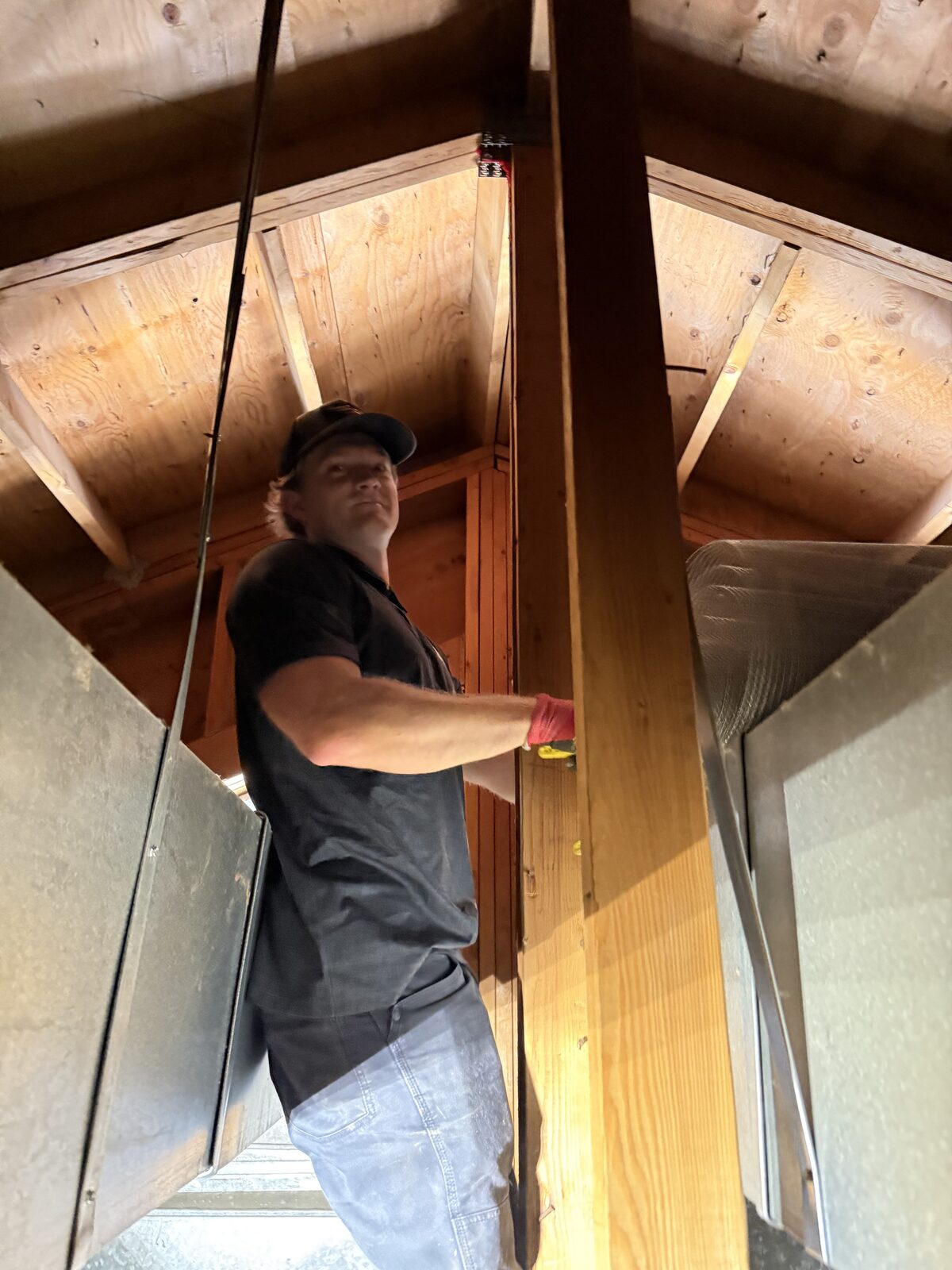
It starts around midnight. You are already in bed when you hear it: a slow, deliberate scratching from somewhere above the drywall. You hold your breath. It stops. Then it starts again, moving a foot to the left, as if whatever is up there just got more comfortable.
That call, or some version of it, comes into our office every week from homeowners across the Wasatch Front and along the Wasatch Back. Salt Lake City, Sandy, Orem, Layton, and towns up into the foothills all have the same thing in common: attics that border wildlife habitat. Utah's terrain, canyon mouths opening into subdivisions, mature trees pushing against rooflines, open desert scrub within half a mile of most suburbs, makes attic intrusions a predictable problem, not an unusual one.
The good news is that animals are not subtle about which one they are. Sound, timing, and season together point to a short list of suspects. By the time you finish this, you should have a working theory about what is up there and a clear sense of the right next step.
Sound Is Your First Clue: Scratching, Scurrying, and Thumping Are Different
Each animal has a distinct movement pattern, and those patterns produce recognizable sounds. Scratching is slow and deliberate. Scurrying is fast and light, often traveling in a straight line. Thumping is heavy and intermittent.
Scratching with a dragging quality usually means claws working against wood or insulation. Utah fox squirrels and rock squirrels both scratch while gnawing on joists or stashing food. A single sustained scratch that stops and starts is often an animal chewing, not walking. Raccoons scratch more broadly as they rearrange nesting material, a slower, broader sound than a squirrel's focused gnaw.
Scurrying is the signature of smaller animals. Deer mice, house mice, and Norway rats are all common in Utah homes. A mouse can pass through a gap roughly the size of a dime (about 1/4 inch). A rat needs only a 1/2-inch opening. Their footsteps are fast and light, often following the same path along a joist repeatedly. If the scurrying is loud enough to wake you from a sound sleep, the animal is probably a rat, not a mouse.
Thumping points to heavier animals. A raccoon dropping its weight from a beam produces a muffled thud that stops a conversation. Opossums move slowly and produce a heavy dragging sound. If the noise is that emphatic, think raccoon or opossum before anything smaller.
Fluttering or soft chittering near dusk or just before dawn is almost always bats. Little brown bats and big brown bats are the two species most commonly found in Utah attics. They do not scurry. They rustle. A colony produces a faint, papery sound, and if young pups are present you may hear high-pitched squeaking as well. The sound is easy to dismiss as wind until you notice it happens at the same time every evening.
Does the Time of Day Tell You Which Animal It Is?
Time of activity cuts the suspect list in half. Animals fall into two groups: those active during the day (diurnal) and those active at night (nocturnal). A few, like raccoons, are opportunistic and can shift, but they have a clear preference.
Daytime noise, roughly sunrise to mid-afternoon, points almost immediately to squirrels. Utah's fox squirrels and rock squirrels are among the very few attic animals that move during daylight. They leave to forage at dawn, return through the morning, and settle in the early afternoon. If the noise tracks closely with sunlight, squirrels are the first suspect to rule in or out. Homes near the foothills in Ogden, Provo Canyon, or the neighborhoods that back up to the Oquirrh Mountains see squirrel activity more than most.
Nocturnal noise, particularly between 10 p.m. and 4 a.m., points to rats, mice, raccoons, opossums, and bats. Rats are most active in the two hours after midnight. Raccoons peak between midnight and 3 a.m. Bats are different: they typically appear only during two short windows, the 45 minutes after dusk and the 30 minutes before dawn. If you hear noise only at those transition moments and it sounds more like fluttering than footsteps, bats move to the top of the list.
Dawn and dusk activity often means animals entering or leaving. Squirrels leaving at first light and returning before dark is a classic pattern. A nursing female may also be making short trips out and back, leaving young behind. Whichever pattern fits your situation, the timing tells you whether you are dealing with a day or night animal before you make a single call.
Season Tells You Why the Animal Is There
Utah's seasons drive wildlife behavior in predictable ways. Knowing the time of year helps you understand not just what is up there, but how urgent the situation is.
Late winter into early spring is when squirrels and raccoons are most likely to move into attics. Pregnant females are searching for safe den sites. A female squirrel typically gives birth to two to five pups in late February or March in Utah's lower elevations. A raccoon litter averages three to five kits and arrives slightly later, usually April. If you discover an animal during this window, there is a real possibility that young are present as well. Removing a nursing mother without accounting for her offspring creates a second problem: pups that cannot survive on their own and will die inside the structure if left.
Late spring through summer is peak season for bat activity. According to the Utah Division of Wildlife Resources (DWR), the bat maternity season runs roughly May through August. During that period, exclusion work (sealing the entry points so bats cannot get back in) is restricted, because flightless pups would be trapped inside and die. This is not a suggestion. Performing bat exclusion during that window is restricted under DWR rules. Confirm the current guidance at wildlife.utah.gov before any bat work begins.
Fall is when deer mice and other rodents move indoors. Temperatures drop fast along the Wasatch Front, and rodents follow the warmth. A single pair of mice can produce up to 35 offspring in a year under good conditions. By the time a homeowner in South Jordan or Lehi hears them, a small entry point has usually been open for several weeks. Squirrels also build secondary litter nests in fall and will re-enter any space that was not sealed after their spring visit.
Winter noise is often raccoons or opossums seeking warmth. Neither animal fully hibernates, so mild winter periods bring renewed activity after quiet cold snaps. If you hear noise for two weeks, then silence for a week, then noise again, you are likely dealing with a raccoon following temperature patterns rather than an animal that left and returned.
What About Utah-Specific Species You Might Not Expect?
Utah has a few animals that do not appear in national discussions of attic wildlife but show up regularly in our inspection reports.
Pack rats (also called woodrats) are common across Utah's desert-adjacent areas, including homes near St. George and the west side of the Salt Lake Valley. They are nocturnal, produce a slow deliberate scratching sound, and are known for collecting debris. A technician who finds a pile of sticks, pebbles, or miscellaneous objects in a crawl space is often looking at pack-rat sign. Pack rats can also chew vehicle wiring, so if you are finding damage under the hood at the same time, the two problems likely share a source.
Great Basin rattlesnakes are present across much of Utah and, while not an attic animal, they do enter crawl spaces, basements, and foundation gaps. According to the Utah Division of Wildlife Resources (DWR), Great Basin rattlesnakes are a protected native species and may not be killed except in specific circumstances. If you hear a dry, papery rustling in a low space or find shed skin, contact a licensed technician before approaching the area.
Physical Evidence That Confirms the Sound
Sound narrows the list. Physical evidence confirms it. You can check several of these yourself from safe, accessible locations before a technician arrives.
Entry points on the exterior: Squirrels typically use gaps at roof-soffit intersections, damaged fascia boards, and open vents. A squirrel needs roughly a 1.5-inch gap. Raccoons need 4 inches or more and will often enlarge an existing opening. Mice and rats need almost nothing. A 1/4-inch crack in mortar or a gap around a pipe penetration is enough for a mouse. Bats can enter through a gap smaller than a finger's width.
Droppings: Mouse droppings are the size of a grain of rice, dark, and tapered. Rat droppings are about 3/4 of an inch, blunt-ended, and capsule-shaped. Squirrel droppings are similar to rat droppings and often found near food caches. Raccoon droppings are 2 to 3 inches long and may contain berry seeds or insect parts. Bat guano crumbles easily when dry and tends to accumulate in a cone-shaped pile directly below the roost point.
Nesting material: Squirrels build compact nests from leaves, shredded insulation, and paper. Raccoons pile soft material into a loose mound. Mice tuck small nests into corners or inside boxes stored in the attic. Nesting material tells you the animal is not passing through. It has established a home and will not leave on its own.
Chew marks and grease trails: Rodents gnaw on wood, wiring insulation, and structural foam. Chewed wiring is a direct fire risk. Rats also leave a dark, oily grease smear along their regular travel paths, a residue from their fur against the surface. If you see those smears on a joist or along a wall, you have a rat, and it has been there long enough to establish a regular route.
What Happens If You Wait Too Long to Call?
Most homeowners wait. The average gap between first hearing an attic noise and calling a wildlife company is four to six weeks. That window matters for two reasons.
First, the damage compounds. Wildlife inside an attic produces three categories of harm: structural (gnawed joists, degraded insulation, damaged decking), hazardous (contaminated insulation, urine-saturated wood, chewed wiring), and biological (parasites like fleas and mites that remain after the animal is removed if the space is not properly cleaned). The National Fire Protection Association has documented that rodents are responsible for an estimated 20 to 25 percent of house fires with undetermined causes. That number reflects what happens when wire chewing goes undetected.
Second, young animals complicate removal. An animal that enters in February may be raising a litter by March. Exclusion work performed before young are mobile is faster and less expensive than a job that requires locating and safely removing dependent pups.
General industry estimates for straightforward exclusion work start in the low hundreds of dollars. Full attic remediation following a large colony can reach several thousand. An on-site inspection is the only way to know where your situation falls.
Frequently asked questions
Is it dangerous to leave an animal in my attic?
Yes, over time. Most wildlife will chew wiring, shred insulation, and foul the space with waste. Structural damage and fire risk grow the longer an animal remains. Some species also carry parasites or diseases. A licensed technician can assess the risk during an on-site inspection.
Can I remove the animal myself in Utah?
It depends on the species. For many animals you can legally trap and relocate on your own property, but there are important exceptions. Bats are protected under Utah Division of Wildlife Resources rules, and exclusion is restricted during their maternity season, roughly May through August. Squirrels and raccoons may also have seasonal restrictions. Always confirm current rules with the Utah DWR (wildlife.utah.gov) before attempting removal of any wild animal.
How much does wildlife removal cost in Utah?
Costs vary by species, the number of entry points, and how long the animal has been present. Industry ranges typically run from a few hundred dollars for a straightforward rodent exclusion to several thousand dollars for a full bat-colony exclusion with attic remediation. The most accurate answer comes from an on-site inspection, where a technician can give you a specific number for your home.
The noise stopped. Does that mean the animal is gone?
Not usually. Many species go quiet during the day or during a cold stretch and become active again when temperatures shift or after dark. Young animals also go quiet as they mature. The entry point is still open. If you heard noise, have the exterior inspected.
Related reading
Wildlife in your home? Contact us today.
Call to schedule an inspection.