How Wildlife Gets Into Your Home in Utah: The Entry Points That Matter
The gap that let the animal in was almost always there for months before it moved. Here is where Utah homes fail first and what a permanent fix actually looks like.
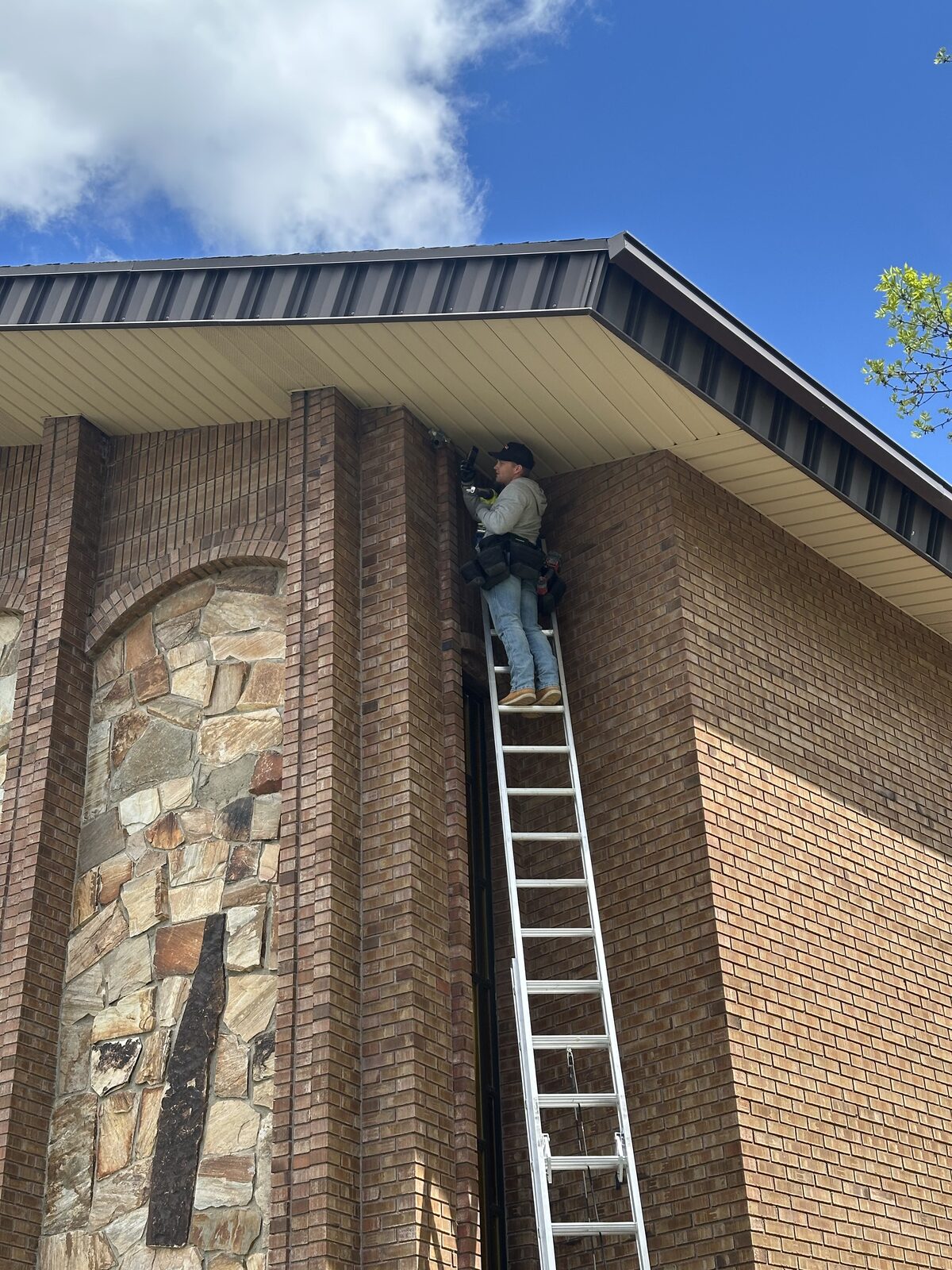
Every year, Utah Wildlife Specialists gets calls from homeowners in Salt Lake City, Orem, and Layton who are convinced the animal in their attic found a way in overnight. It almost never works that way. The gap that let the squirrel or raccoon inside had been there for months, sometimes years. The animal did not create it. It found it, the same way water finds a low point.
Utah's climate accelerates this. Wide temperature swings between summer heat and winter cold cause wood to expand and contract, caulk to crack, and metal to shift over time. Add the freeze-thaw cycles that hit the Wasatch Front every winter, and rooflines that looked tight two years ago may have opened up in ways you would only spot with a ladder and daylight behind you.
This post covers where animals actually enter homes in Utah, how little space each species needs, and what a correct fix looks like. The answer is nearly always exclusion, meaning sealing the entry points so animals cannot return, not trapping and moving them elsewhere. Exclusion is more permanent and the only approach that solves the problem rather than relocating it.
Your Roofline Is the First Place Utah Animals Look
The roofline, including the fascia boards, soffits, and junction lines where different roof planes meet, is the single most common wildlife entry zone on Utah homes. It sits above eye level, homeowners rarely inspect it, and years of weathering quietly open gaps along the entire perimeter.
Fascia is the flat trim board that runs along the lower roof edge. Soffit is the horizontal panel on the underside of the overhang. Together they form a continuous seam around the house. That seam is where fox squirrels and gray squirrels start looking, and where raccoons push once they find soft material.
A gap as small as 1.5 inches is enough for a squirrel. A raccoon needs roughly 4 inches, but raccoons can pull back rotted or loose soffit material with their front paws and turn a hairline gap into a usable hole in one season. In areas like South Jordan and Sandy, where homes from the 1990s and early 2000s are entering their third decade, wood rot along the fascia is increasingly common, and it compounds fast once water gets underneath.
When inspecting a roofline, focus on these spots:
- Corners where fascia boards meet at angles, especially over garage doors
- Anywhere a dormer or addition meets the main roofline
- Low points where water has pooled and softened the wood
- The ridge cap at the peak where two roof planes come together
- Step flashing along a chimney or skylight curb, where caulk fails first
Gable Vents: The Opening Most Utah Homeowners Never Think About
Gable vents are the louvered or screened openings cut into the triangular end walls of an attic, designed to let heat escape in summer. They are often the largest unguarded opening on the exterior of a home, and the mesh protecting them is rarely adequate.
Factory-installed gable vent screens commonly use 1/4-inch plastic mesh. That mesh degrades in Utah's high-UV environment faster than it would at lower elevations. A screen that looked solid when the house was built may be brittle enough to break through with moderate pressure after ten years of sun exposure. Flying squirrels can pass through a 1-inch gap. Juvenile raccoons need about 3 to 4 inches, which is well within reach of a degraded 12-by-16-inch vent opening.
The correct replacement is 1/4-inch galvanized hardware cloth, a rigid welded mesh that holds its shape under pressure. Standard window screen is not equivalent. If you can push your gable vent screen inward with one hand without it resisting, it is time to replace it.
At elevations common in communities along the Wasatch Front, including Ogden and Provo, temperature-driven expansion and contraction also loosens the frames that hold gable vent screens in place. The screen fails before the vent cover does, and the gap opens without any obvious sign from the ground.
What Comes In Through Dryer Vents and Exhaust Covers?
Every dryer vent, bathroom exhaust fan, and kitchen range hood exits the home through a sidewall or the roof. Each termination is a warm opening that pushes heat outward. From the outside, it reads as a sheltered cavity, and Utah's bird and rodent populations have figured this out.
European starlings and house sparrows are the most common duct occupants. Both are non-native, non-protected species, so there is no legal restriction on removing their nests. The problem is what they leave behind. A starling nest stuffed into a dryer duct can block airflow enough to significantly increase drying times and, in serious cases, create a lint-fire risk. According to the U.S. Fire Administration, roughly 2,900 dryer vent fires occur nationally each year, with lint accumulation as a leading cause.
Native songbirds are a different situation. Many are protected under the Migratory Bird Treaty Act, and according to the Utah Division of Wildlife Resources, disturbing an active nest with eggs or young requires a federal permit. Species identification is required before any action. A licensed technician will make that call on-site before recommending removal.
The right fix for any exhaust vent is a pest-proof cover with a spring-loaded or gravity-flap damper that opens under air pressure and closes when the appliance is idle. Do not install rigid mesh over a dryer duct. Lint will clog it and create the same fire hazard the birds would have caused.
Chimneys Without Caps Are a Raccoon Invitation
An uncapped chimney flue looks exactly like a hollow tree to a raccoon. Raccoons are hardwired to raise young in dark, enclosed cavities, and a masonry chimney that has not been used recently is thermally stable, dry, and sheltered. Raccoon mothers nesting inside chimney flues is one of the most common calls Utah Wildlife Specialists handles each spring, across properties in Lehi, West Valley City, and St. George alike.
The right chimney cap has a welded galvanized wire cage around all four sides, not just a rain cover. A flat cap without a cage stops water but not animals. A cage with failed welds, or one that has been dented and opened, provides no protection. Caps need to be checked after major wind events, which Utah's canyons and valleys produce regularly.
Chimney swifts are a separate issue. These migratory birds are federally protected, and according to the Utah Division of Wildlife Resources, active nests cannot be disturbed during nesting season. If swifts have taken up residence in your chimney, do not attempt capping until a licensed professional has confirmed the nest is inactive and the legal window is open.
When there is an active raccoon family in the flue, the timeline matters. Young raccoons become mobile and self-sufficient roughly 8 to 10 weeks after birth. Removing a mother before the young can follow on their own creates a separate problem and, in some cases, conflicts with Utah wildlife regulations. A technician will assess whether a one-way device is appropriate immediately or whether a brief waiting period is the right call.
Foundation Gaps and Crawlspace Vents Are the Other Vulnerability
The bottom of your home is as important as the top. Skunks, voles, pack rats, and the occasional opossum look for entry at or below grade. A crawlspace that is not properly sealed is essentially an open invitation on the north side of the house, where homeowners almost never look.
Crawlspace vents are standard in homes built across Utah before the 1990s, and many are still in place with their original covers. Stamped metal vent covers corrode and warp. Plastic ones crack from UV exposure. A skunk needs roughly 4 inches of vertical clearance to enter a crawlspace. Voles and pack rats need a fraction of that. In areas of Ogden and Provo with older housing stock, deteriorated crawlspace vent covers are one of the most consistent findings during inspections.
Groundhogs and voles present a different problem: they dig. Soil that has settled away from a foundation sill can leave a gap large enough to allow entry without any vent cover failing at all. Foundation gaps are also how Great Basin rattlesnakes enter crawlspaces in the warmer months, particularly in the southern part of the state near St. George. A sealed crawlspace perimeter reduces that exposure significantly.
Effective exclusion at the foundation means heavier materials: 1/2-inch hardware cloth buried at least 12 inches below grade and angled outward at the base to discourage digging. Spray foam alone is not adequate anywhere rodents are active. They chew through it. Physical barriers are the only reliable option.
How Much Gap Does Each Utah Species Actually Need?
The gaps animals use are almost always smaller than homeowners expect. This is a general reference for species common to Utah:
- Mouse: 1/4 inch (roughly a pencil diameter)
- Vole or pack rat: 1/2 inch or less
- Rat: 1/2 inch
- Fox or gray squirrel: 1.5 inches
- Bat: a gap smaller than a finger's width
- Skunk or opossum: 3 to 4 inches
- Raccoon: 4 inches, and will enlarge damaged material further
Utah is home to multiple bat species, several of which are protected under both state and federal law. According to the Utah Division of Wildlife Resources, exclusion work on bat roosts is restricted during the maternity season, roughly May through August, when pups are present but not yet capable of flight. Sealing a bat entry point during that window traps young bats inside. A licensed technician will identify the species and schedule exclusion work within the legal window, typically late summer through early spring.
Is There Already an Animal Inside When You Start Sealing?
Sealing entry points with an animal still inside is the mistake that turns a straightforward exclusion job into a months-long odor problem. An animal trapped inside will damage drywall, insulation, and wiring trying to get out. Young animals that cannot escape die in the wall cavity. In summer heat, decomposition inside an attic or wall becomes apparent within days.
A correct exclusion sequence has three steps. First, a thorough inspection of both the interior and exterior to determine whether the space is actively occupied. Second, if animals are present, a one-way exclusion device goes over the primary entry point. The animal exits to forage and cannot push back in. Third, after the space is confirmed empty, typically monitored over several days, the device comes out and the opening is permanently sealed along with every other potential entry point found during the inspection.
This process is slower than plugging holes. That is the point. The extra time spent confirming the space is empty is what prevents a callback six weeks later when a homeowner calls about an odor they cannot place.
Frequently asked questions
How small a gap does a mouse need to enter a Utah home?
A mouse can fit through a gap roughly the diameter of a pencil, about 1/4 inch. A rat needs about 1/2 inch. Cracks around plumbing penetrations, utility conduits, and foundation weep holes are common enough for rodents to move in and start breeding. Steel wool is a temporary deterrent. Permanent exclusion means rigid materials: metal flashing, hardware cloth, or exterior-rated caulk, depending on the location.
Can I exclude bats from my Utah home on my own?
No, not legally during maternity season. According to the Utah Division of Wildlife Resources, bats in Utah receive state and federal protections, and exclusion work that traps flightless pups inside violates those protections. The DWR restricts exclusion during the maternity season, roughly May through August, when young bats cannot yet fly. A licensed wildlife technician will know the legal window for your area and species, and will set up one-way exclusion devices timed correctly.
What is a one-way exclusion door and why is it used?
A one-way exclusion device is a tube or flap mounted over an active entry point. The animal pushes through to exit when it leaves to forage, but cannot push back in from the outside. Once the space is confirmed empty over several days, the device is removed and the opening is permanently sealed. No animal is trapped, injured, or separated from young inside. The method works for most Utah species, including squirrels, raccoons, and bats.
How much does wildlife exclusion cost in Utah?
Pricing depends on the home's size, the number of entry points found, which species is involved, and how accessible the affected areas are. Industry ranges run from a few hundred dollars for a single-point repair to several thousand for a full-perimeter seal on a large structure. The only accurate number comes from an on-site inspection.
Related reading
Wildlife in your home? Contact us today.
Call to schedule an inspection.