
Bat Removal South Jordan, UT
South Jordan has some of the newest housing in Salt Lake County, but new homes still get bats. Here is where they get in, who to call, and when the work can be done.
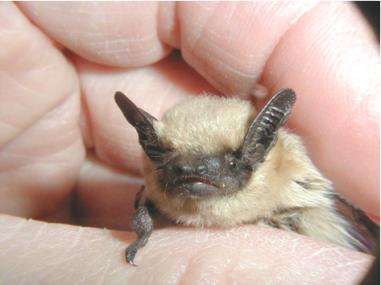
New homes, new entry points
About 49% of South Jordan's 25,959 housing units were built in 2010 or later, and the median home dates to 2010. Only 5% predate 1980. New construction rarely has the rotted boards older houses do. Bats get in instead through ridge-vent ends, unscreened gable vents, gaps behind stone veneer where it meets the soffit, and the joints between garage and house rooflines. DWR's advice is the same for any home: inspect siding, chimneys and rooflines, and seal gaps with caulking, hardware cloth, foam rubber, foam sealant, tar paper or chimney caps, outside the pup season.
A tightly built attic can also get very warm, and DWR's first prevention tip is to cool the attic with fans so bats find it uncomfortable.
Who to call in South Jordan
- Animal services (South Jordan): 801-840-4000, per the Salt Lake County bat brochure. Salt Lake County Animal Services' main line is 385-468-7387.
- Possible contact with a bat: Salt Lake County Health Department, 385-468-4222. Call immediately so the person can be evaluated for preventive treatment.
- After-hours disease emergency: 385-468-8888, option 7.
The county's rule is: do not dispose of or release the bat. If possible, contain or cover it and call Animal Services; testing may rule out the need for treatment. If you find a bat inside, dead or alive, close it into one room or put a container over it without touching it, then call.
Utah rabies numbers
The Utah Department of Health and Human Services (DHHS) 2024 annual report recorded 31 rabid animals statewide, and all 31 were bats. It was the highest number of positive detections Utah has recorded in a single year. Of 228 bats tested, 13.6% were positive, and those bats exposed 13 people and 13 pets. Most rabid animals in Utah turn up between June and October. Mexican free-tailed bats were the largest share of 2024 positives (10), followed by big brown bats (7) and western pipistrelles (6).
When bats can be excluded in South Jordan
The Utah Division of Wildlife Resources (DWR) says female bats usually move into buildings in May or June to give birth, and that June through August is the hardest time to deal with a colony. Blocking the mothers then kills the flightless pups, and bats are protected wildlife in Utah. Unless bats are coming into close contact with people, DWR does not permit colony removal during that period. DWR advises against sealing openings from May through August and names fall as the best time. Salt Lake County Health Department's bat brochure is stricter: it says not to use exclusion methods from May 1 to September 1, because pups cannot fly yet and it is illegal to harm them.
For an attic colony, DWR says to contact a local, permitted wildlife nuisance control company, which coordinates the removal with DWR for a time of year that won't harm the pups. After August, DWR describes hanging bird netting over an exterior opening (stapled at the top and sides, open at the bottom) for four to five days, until the bats have left, and then sealing the holes. In South Jordan, NOAA normals for the Draper-Point Of Mtn station put the average low at 50°F or warmer in Jun–Sep, the months when bats are most active here.
South Jordan at a glance
- Housing units: 25,959 (median year built 2010)
- Built before 1980: 5%; built 2010 or later: 49%
- Single-family detached: 68%; buildings with 10+ units: 11%
- Renter-occupied homes: 22%
- Average January low: 25°F; average July high: 94°F
- Months with an average low of 50°F or warmer: Jun–Sep
Housing figures: U.S. Census Bureau, ACS 2024 1-year estimates (tables B25024, B25034, B25035, B25003) via Census Reporter. Climate: NOAA 1991–2020 normals, Draper-Point Of Mtn station.
Common questions
Can bats get into a new South Jordan home?
Yes. Ridge-vent ends, gable vents, gaps behind stone veneer and roofline joints are common entry points on newer construction.
Who do I call about a bat in South Jordan?
Salt Lake County's bat brochure lists 801-840-4000 for South Jordan. For possible human contact, call the Salt Lake County Health Department at 385-468-4222.
Does cooling my attic help?
DWR lists cooling the attic with fans as a way to make it uncomfortable for bats to move in.
When can bats be excluded in South Jordan?
Not from May 1 to September 1, per Salt Lake County. DWR says fall is the best time.
Is it legal to kill bats in my attic?
No. Bats are protected wildlife in Utah, and it is illegal to kill them.
Nearby city guides
Sources
- Salt Lake County Health Department: bats brochure (PDF)
- Salt Lake County Animal Services: contact
- Salt Lake County Health Department: Infectious Disease Bureau
- Utah DWR: What to know about bats in Utah (July 14, 2026)
- Utah DHHS: Rabies Annual Report 2024
- Census Reporter: South Jordan profile (ACS 2024 1-year)
- NOAA NCEI 1991–2020 monthly normals (Draper-Point Of Mtn)
Other Utah cities we serve
We serve all of Utah. Here are nearby service areas.
Other wildlife removal services we offer here
South Jordan bat removal, done right.
Call for a phone consultation. Written warranty. UDWR licensed. Same-day available. Call to schedule an inspection.