
Bat Removal St George, UT
Southwest Utah Public Health reported Washington County's first rabid bat of 2026. Here is who to call in St. George, and how desert heat and housing shape bat season.
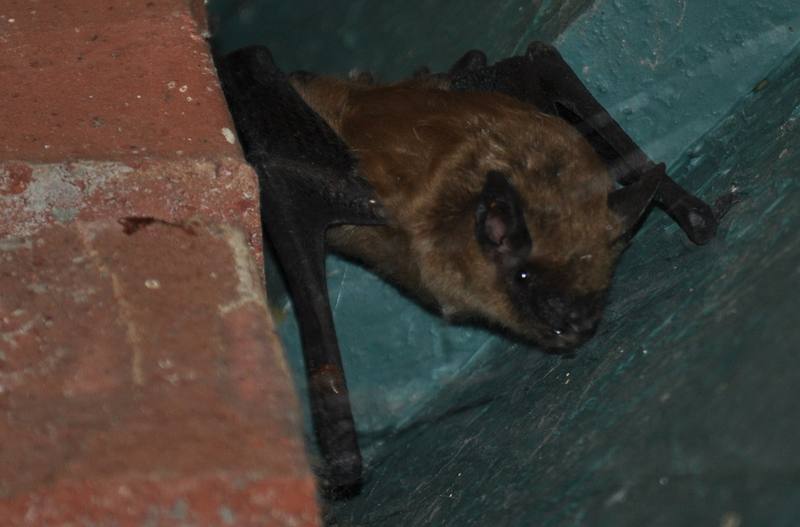
Washington County's first 2026 rabid bat
On April 15, 2026, Southwest Utah Public Health Department announced a rabid bat in Washington County, the first in Utah that year. The department notes that bats are the primary rabies carrier in Utah. Epidemiologist Adrianna Vidal was quoted in the release. Physical contact with a bat, or waking up with a bat in the room, should be treated as a possible bite. Utah law requires dogs, cats and ferrets to be vaccinated.
Southwest Utah (Beaver, Garfield, Iron, Kane and Washington counties) had 8 of Utah's 31 rabid bats in 2024, the most of any local health jurisdiction, according to DHHS. Washington County alone had 5.
Who to call in St. George
- St. George Animal Services: 435-627-4350. Shelter at 605 E Waterworks Rd. Hours vary; after hours call dispatch at 435-627-4300. Animal Service Officers are part of the St. George Police Department.
- Southwest Utah Public Health Department: (435) 865-5196 or (435) 986-2566. Online rabies exposure assessment tool at swuhealth.gov/rabies.
- Utah DWR Washington County Field Office: 435-879-8694, 451 N SR-318, Hurricane. St. George Animal Services directs wildlife (injured, suffering, dangerous or nuisance) here.
Utah rabies numbers
The Utah Department of Health and Human Services (DHHS) 2024 annual report recorded 31 rabid animals statewide, and all 31 were bats. It was the highest number of positive detections Utah has recorded in a single year. Of 228 bats tested, 13.6% were positive, and those bats exposed 13 people and 13 pets. Most rabid animals in Utah turn up between June and October. Mexican free-tailed bats were the largest share of 2024 positives (10), followed by big brown bats (7) and western pipistrelles (6).
St. George's desert climate and housing
St. George has 44,385 housing units. Only 9% predate 1980; about 31% were built in 2010 or later, and the median home dates to 2002. The St. George climate station averages a July high of 102°F, and lows of 50°F or warmer in May–Sep. That long warm season means insects and bats stay active later into the year than in northern Utah. DWR notes that Utah's greatest bat diversity is in southern Utah, and that Mexican free-tailed bats (the largest share of 2024 statewide positives) migrate through the state in fall.
When bats can be excluded in St. George
The Utah Division of Wildlife Resources (DWR) says female bats usually move into buildings in May or June to give birth, and that June through August is the hardest time to deal with a colony. Blocking the mothers then kills the flightless pups, and bats are protected wildlife in Utah. Unless bats are coming into close contact with people, DWR does not permit colony removal during that period. DWR advises against sealing openings from May through August and names fall as the best time.
For an attic colony, DWR says to contact a local, permitted wildlife nuisance control company, which coordinates the removal with DWR for a time of year that won't harm the pups. After August, DWR describes hanging bird netting over an exterior opening (stapled at the top and sides, open at the bottom) for four to five days, until the bats have left, and then sealing the holes. In St. George, NOAA normals for the St George station put the average low at 50°F or warmer in May–Sep, the months when bats are most active here.
St. George at a glance
- Housing units: 44,385 (median year built 2002)
- Built before 1980: 9%; built 2010 or later: 31%
- Single-family detached: 66%; buildings with 10+ units: 10%
- Renter-occupied homes: 35%
- Average January low: 28°F; average July high: 102°F
- Months with an average low of 50°F or warmer: May–Sep
Housing figures: U.S. Census Bureau, ACS 2024 1-year estimates (tables B25024, B25034, B25035, B25003) via Census Reporter. Climate: NOAA 1991–2020 normals, St George station.
Common questions
Who do I call about a bat in St. George?
St. George Animal Services at 435-627-4350 (after hours: 435-627-4300). For possible human contact, call Southwest Utah Public Health at (435) 865-5196 or (435) 986-2566.
Has a rabid bat been found in Washington County recently?
Yes. Southwest Utah Public Health announced a rabid bat in Washington County on April 15, 2026, Utah's first that year.
Where do wildlife calls go in St. George?
St. George Animal Services directs wildlife (injured, suffering, dangerous or nuisance) to the DWR Washington County Field Office at 435-879-8694.
When can bats be excluded in St. George?
DWR does not permit colony removal June through August unless there is a human health and safety issue. Fall is the best time.
Why does southern Utah matter for bats?
DWR says Utah's greatest bat diversity is in southern Utah, and Mexican free-tailed bats migrate through the state in fall.
Nearby city guides
Sources
- St. George Animal Services
- Southwest Utah Public Health: Rabid Bat 2026 (April 15, 2026)
- Southwest Utah Public Health: Rabies
- Utah DWR Southern Region
- Utah DWR: What to know about bats in Utah (July 14, 2026)
- Utah DHHS: Rabies Annual Report 2024
- Census Reporter: St. George profile (ACS 2024 1-year)
- NOAA NCEI 1991–2020 monthly normals (St George)
Other Utah cities we serve
We serve all of Utah. Here are nearby service areas.
Other wildlife removal services we offer here
St George bat removal, done right.
Call for a phone consultation. Written warranty. UDWR licensed. Same-day available. Call to schedule an inspection.